Compass Rose: Everything You Need to Know
The compass rose is a fascinating and essential element in the world of navigation and cartography. This blog article will explore all aspects of the compass rose, answering common questions and providing detailed insights into its purpose, design, and history.
Whether you're a curious reader, a student, or someone passionate about maps, this guide will serve as a comprehensive resource.
Table of Contents
What is a Compass Rose? Why is it Called a Compass Rose?What Does a Compass Rose Look Like?The Purpose of a Compass Rose on a Map, what Information Does a Compass Rose Provide?How to Use a Compass RoseThe Symbolism and Meaning of a Compass RoseHow to Draw a Compass RoseCompass Rose on Nautical ChartsTypes of Compass RosesHistory and Different Designs of the Compass RoseThe Role of the Compass Rose in Modern NavigationEducational Value of the Compass RoseCultural Significance of the Compass RoseConclusionWhat is a Compass Rose? Why is it Called a Compass Rose?
Definition of a Compass Rose
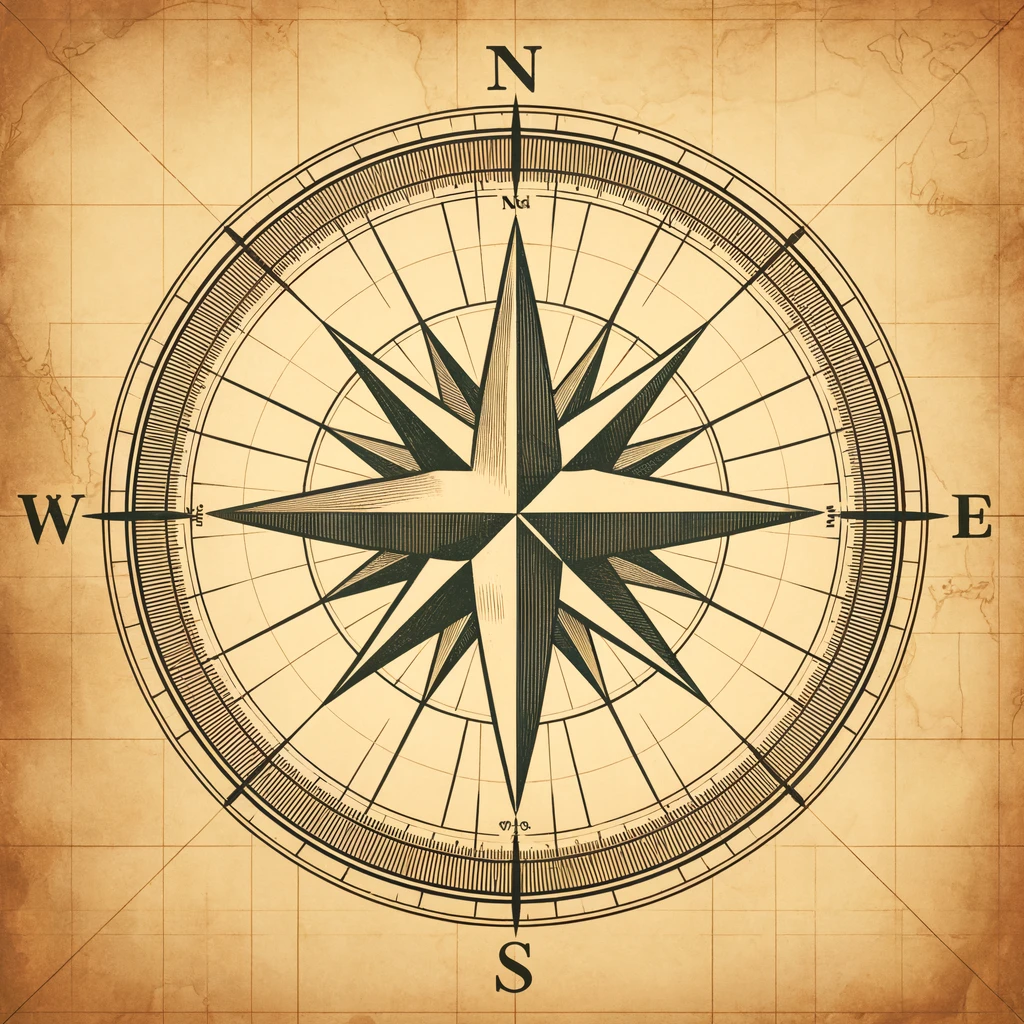
A compass rose, also known as a wind rose or rose compass, is a figure on a compass, map, nautical chart, or monument used to display the orientation of the cardinal directions (north, east, south, and west) and their intermediate points. The name "compass rose" comes from the rose-like appearance of the figure, with petals pointing in the four main directions and beyond.
Definition of a Compass Rose
A compass rose, also known as a wind rose or rose compass, is a figure on a compass, map, nautical chart, or monument used to display the orientation of the cardinal directions (north, east, south, and west) and their intermediate points. The name "compass rose" comes from the rose-like appearance of the figure, with petals pointing in the four main directions and beyond.
Origin of the Name
The term "compass rose" derives from the design's resemblance to a rose flower. Historically, the petals or points of the compass were drawn in a stylized manner that mimicked the petals of a rose. This artistic representation made it not only functional but also visually appealing on maps and charts.
Source:By Stable MARK, own work, www.stablemark.com
Source: Google Books
What Does a Compass Rose Look Like?
Visual Characteristics
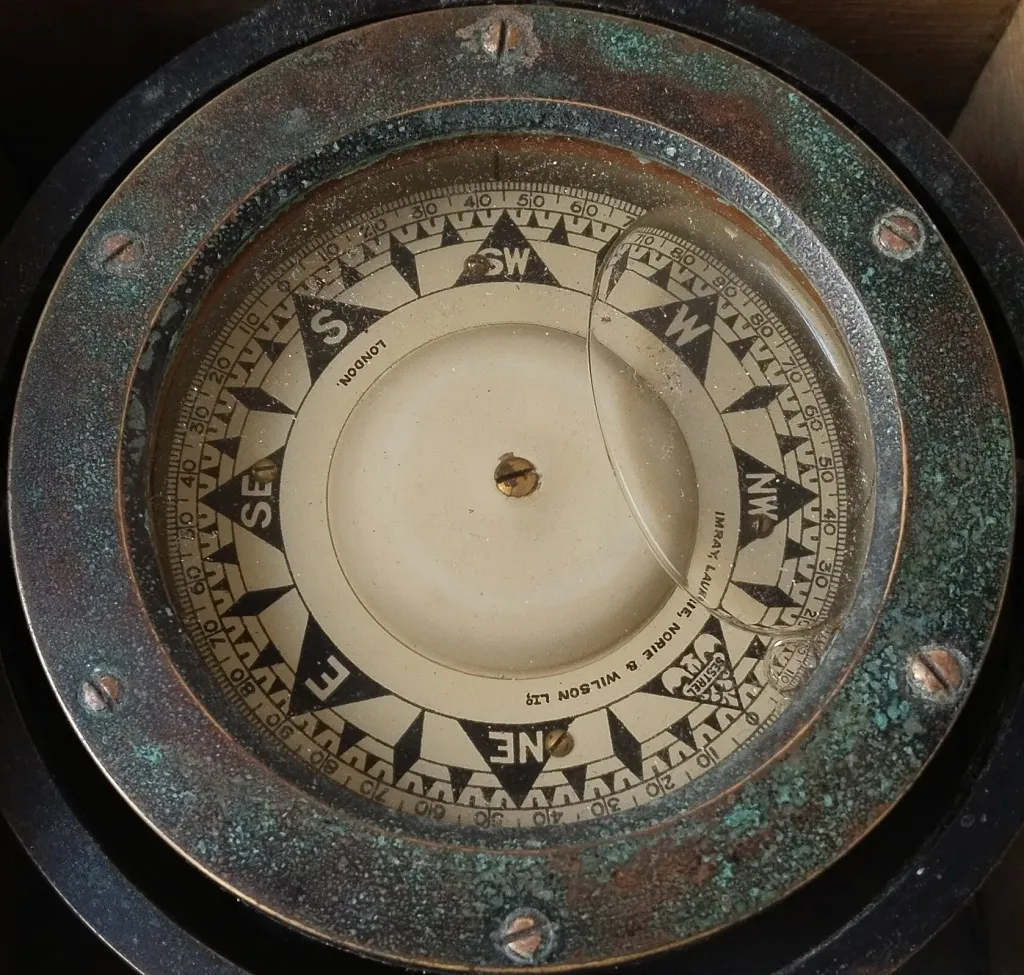
A typical compass rose has a circular shape with radiating points indicating directions. The most basic version shows the four cardinal directions: North (N), East (E), South (S), and West (W). More detailed versions include the ordinal directions (NE, SE, SW, NW) and further subdivisions like NNE, ENE, etc., creating a starburst effect with up to 32 points.
The Purpose of a Compass Rose on a Map, what Information Does a Compass Rose Provide?
Navigational Utility
The primary purpose of a compass rose on a map is to indicate directions. It helps map readers understand the orientation of the map and navigate accurately. By aligning the compass rose with the real-world cardinal directions, users can determine their heading and make informed decisions about their route.
Details Conveyed
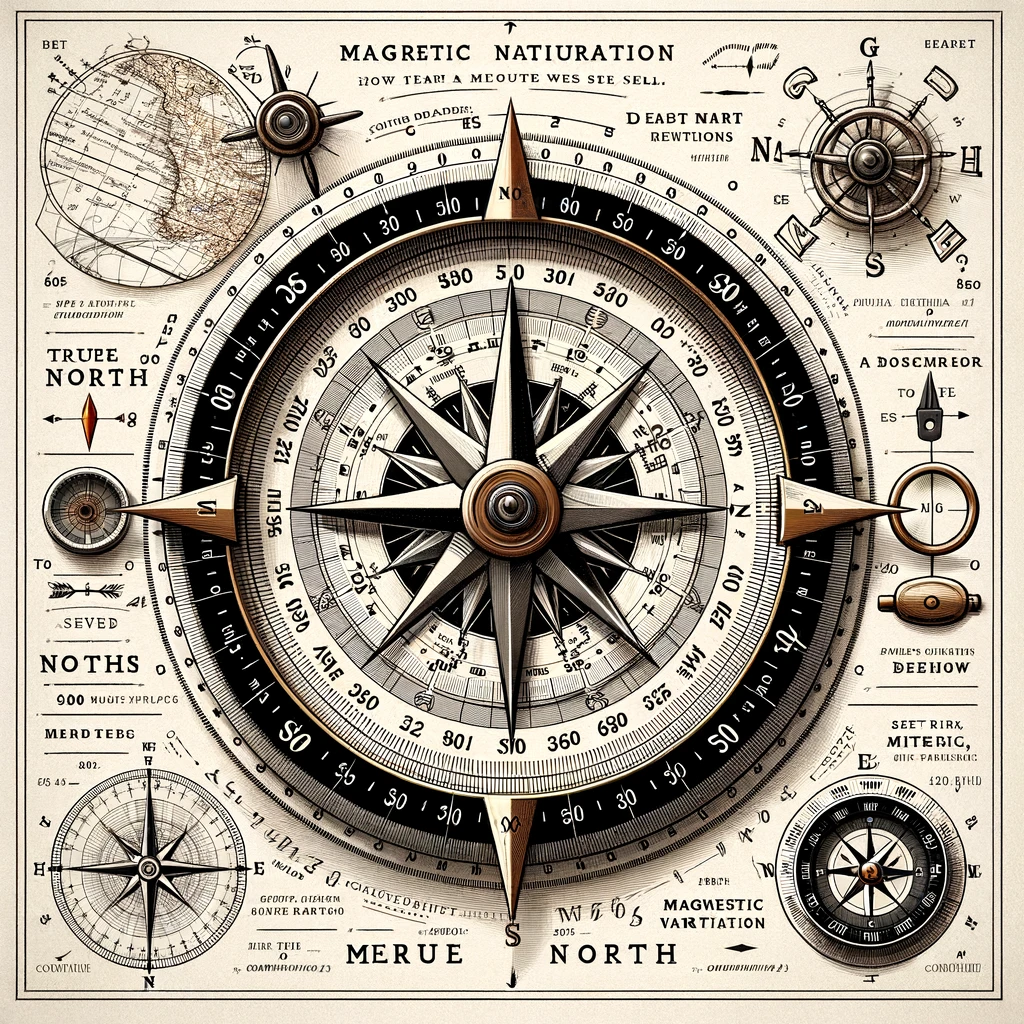
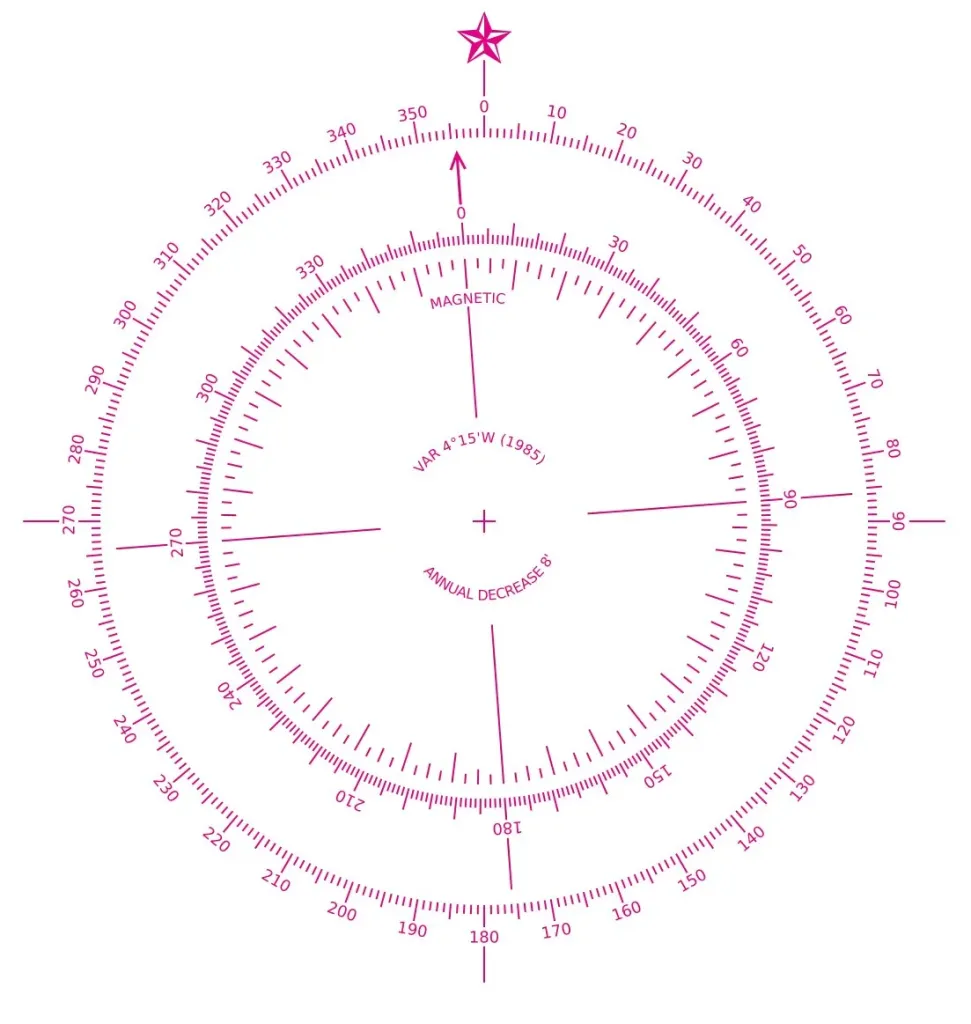
A compass rose provides crucial directional information. The inner ring often shows the four cardinal directions, while the outer ring can display additional subdivisions, providing a detailed orientation guide. On nautical charts, the inner ring might indicate true north, while the outer ring shows magnetic north, helping sailors correct for magnetic variation.
How to Use a Compass Rose
Practical Application
Using a compass rose is straightforward. Align the north point of the compass rose with true north or magnetic north, depending on your needs. This alignment helps you understand the map's orientation. Then, use the compass rose to determine the direction to your destination or to orient yourself in the real world.
Source:By Stable MARK, own work, www.stablemark.com
Source: Google Books
The Symbolism and Meaning of a Compass Rose
Beyond Navigation
The compass rose is also rich in symbolism. It represents guidance, direction, and discovery. Historically, it was a symbol of exploration and adventure, guiding sailors and explorers to new lands. Today, it often symbolizes finding one's path and making decisions, both literally and metaphorically.
How to Draw a Compass Rose
Step-by-Step Guide
Drawing a compass rose involves a few simple steps:
- Start with a circle as the base.
- Mark the center point.
- Draw lines from the center to the circle's edge, indicating the cardinal directions (N, E, S, W).
- Add the ordinal directions (NE, SE, SW, NW).
- For more detail, include additional subdivisions (NNE, ENE, etc.).
- Decorate the points to resemble petals for a classic compass rose look.
Compass Rose on Nautical Charts
Special Considerations
On nautical charts, the compass rose is indispensable. It often features two concentric circles, one showing true north and the other magnetic north. This dual representation helps sailors account for the difference between geographic and magnetic poles, ensuring accurate navigation.
Source: Google Books
Types of Compass Roses
Classical Compass Roses
Classical compass roses, also known as wind roses, were used in ancient times to show wind directions. Different cultures had their own versions, often named after winds or local traditions. Here's a table outlining some classical wind roses:
| Wind | Greek | Roman | Frankish |
|---|---|---|---|
| North | Boreas | Septentrio | Nord |
| East | Apeliotes | Subsolanus | Ost |
| South | Notos | Auster | Süd |
| West | Zephyrus | Favonius | West |
Sidereal Compass Roses
Sidereal compass roses are based on celestial navigation, using stars to indicate directions. These are more complex and often used in astronomy and maritime navigation. Here's a table highlighting some of the points and corresponding stars:
| Point | Star |
|---|---|
| North | Polaris |
| East | Altair |
| South | Achernar |
| West | Vega |
Mariner's Compass Roses
Mariner's compass roses are designed for sea navigation, showing both true and magnetic north. These are detailed with degrees to help sailors plot precise courses. They often feature two circles: the inner one indicating true north and the outer one magnetic north.
History and Different Designs of the Compass Rose
Historical Evolution
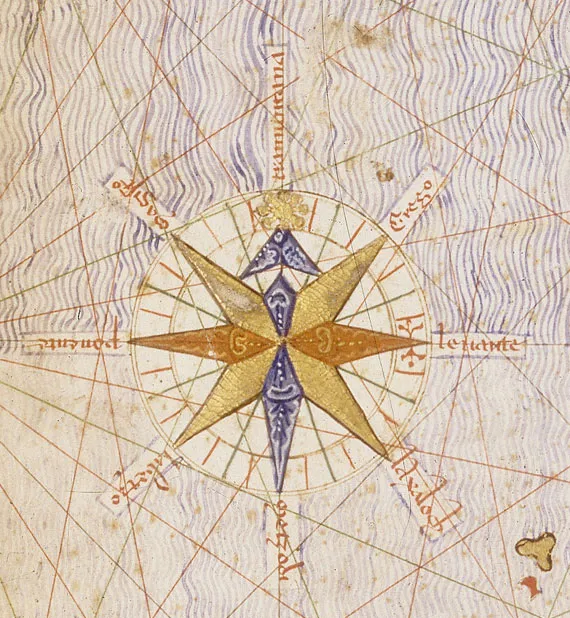
The compass rose has evolved significantly over centuries. Early versions appeared in the Mediterranean as wind roses, indicating the direction of the winds. With the advent of the magnetic compass in the 13th century, the compass rose adapted to show cardinal directions. By the Age of Exploration, detailed compass roses became standard on nautical charts, helping explorers navigate uncharted waters.
Source: Google Books
Variations and Styles
Compass roses come in various designs, reflecting different cultures and periods. Medieval compass roses often featured elaborate decorations, including symbols for the cardinal directions and artistic flourishes. Modern versions tend to be more functional, focusing on clarity and precision. In aviation, compass roses are used at airports, painted on the ground to help pilots align their aircraft for takeoff and landing.
The Role of the Compass Rose in Modern Navigation
Contemporary Applications
While GPS technology has transformed navigation, the compass rose remains a vital tool in many contexts. Nautical charts still use compass roses to indicate magnetic variation. In aviation, compass roses are essential for ground navigation. Even digital maps often include a stylized compass rose to help users orient themselves.
Educational Value of the Compass Rose
Learning and Teaching Tool
The compass rose is a valuable educational tool. It helps students understand basic geography, navigation, and the concept of direction. Teaching children to draw and use a compass rose can enhance their spatial awareness and map-reading skills. Many educational resources and activities incorporate compass roses to make learning interactive and engaging.
Cultural Significance of the Compass Rose
Symbolism in Various Cultures
The compass rose holds cultural significance in various societies. In Western culture, it symbolizes adventure and exploration. In some Asian cultures, it is associated with feng shui and the balance of elements. The compass rose appears in art, literature, and even tattoos, representing guidance, direction, and a sense of purpose.
Conclusion
The compass rose is a timeless and essential tool in navigation and cartography. Its detailed design and symbolic significance make it a fascinating subject for study and practical use. Whether you're a seasoned navigator or a curious learner, understanding the compass rose enhances your appreciation of maps and the art of navigation. Explore this beautiful and functional symbol, and let it guide your journeys both on maps and in life.
Share this article