Garden Arch
Explore the garden arch as a practical and decorative feature, from rustic wooden frames to ornate metal designs of the late 19th and early 20th centuries.
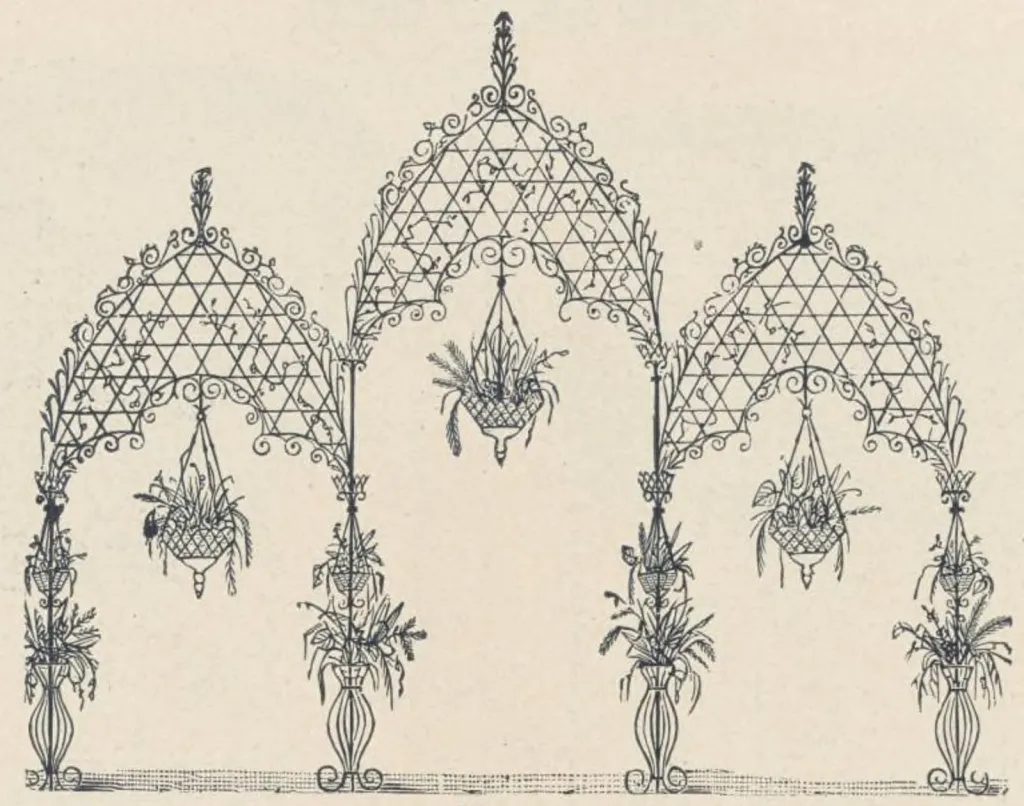
This article looks at historic garden arches through catalog examples from the 1890s to the 1920s, including wooden arches, metal arches, Moon Gates, seating arches, rustic wedding-style arches, and trellised structures for climbing plants.
Table of Contents
Wooden Garden ArchWooden Garden Arch with SeatWooden Garden Arch with GateHeavy Duty Wooden Garden ArchRustic ArchMetal ArchMetal Garden Arch with SeatOrnamental Metal ArchWooden Garden Arch
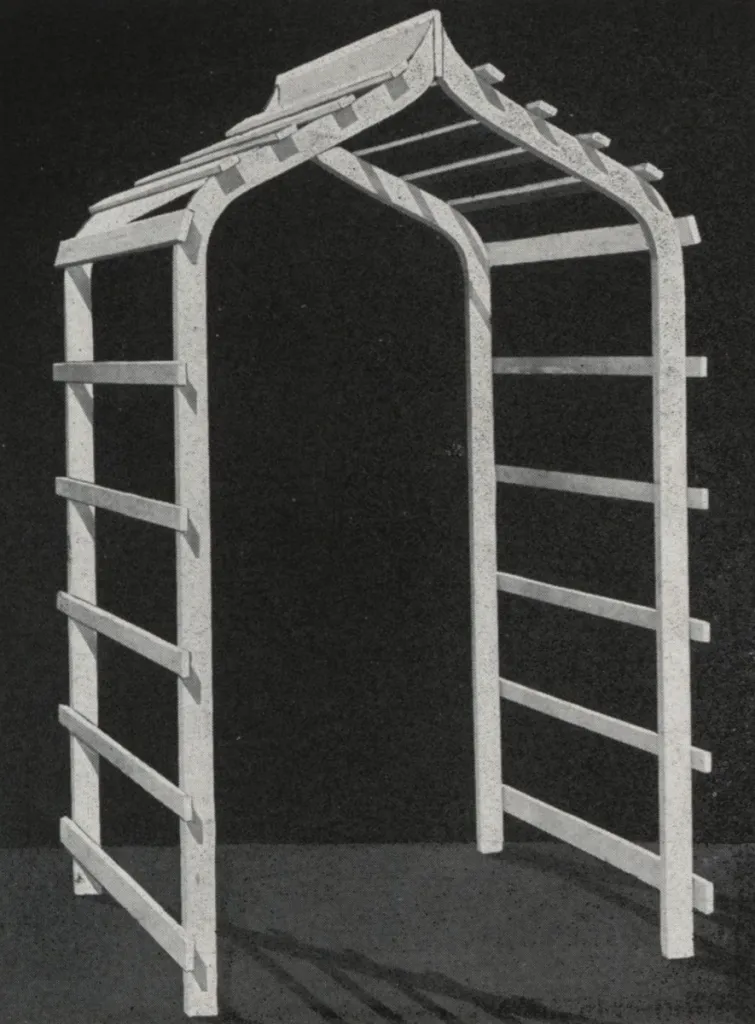
Source: Catalog of Garden Furniture: Arbors, Pergolas, Gateways, Trellises, Fences, Etc., Hand Made. The Mathews Manufacturing Company, Lakewood, Cleveland, Ohio, 1920, seventh edition. Internet Archive.
A wooden garden arch with trellis sides and a simple roof frame, designed to support climbing plants along a garden path.


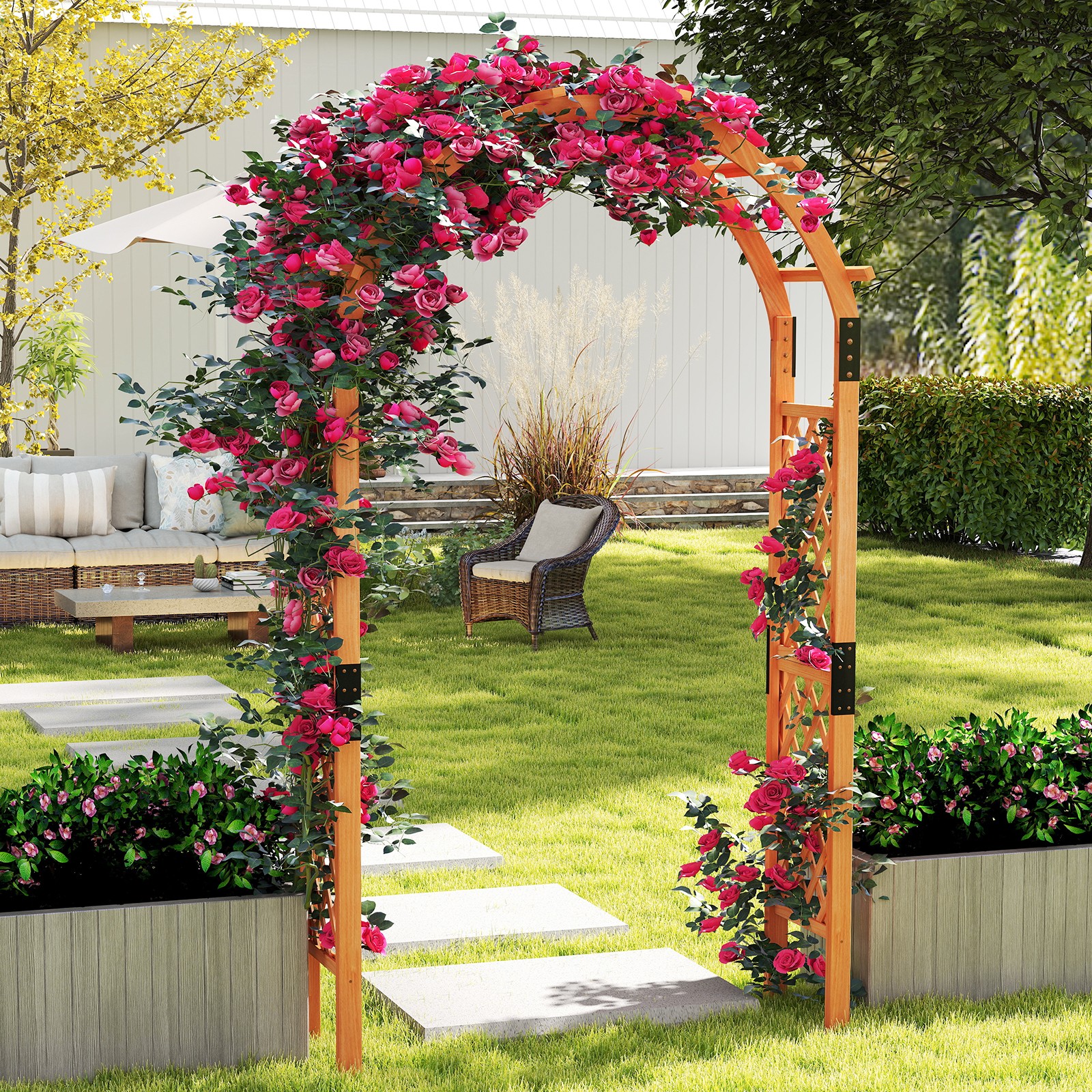


7.7 Ft Garden Arch Wooden Arbor Wedding Flowers Climbing Plants Trellis Outdoor
(6571) 99.40% positive


Wooden Garden Archway Rounded Rowlinson 10 Year Guarantee Trellis Arch Outdoor
(original price: 219.00 GBP)
(100436) 99.60% positive
Wooden Garden Arch with Seat
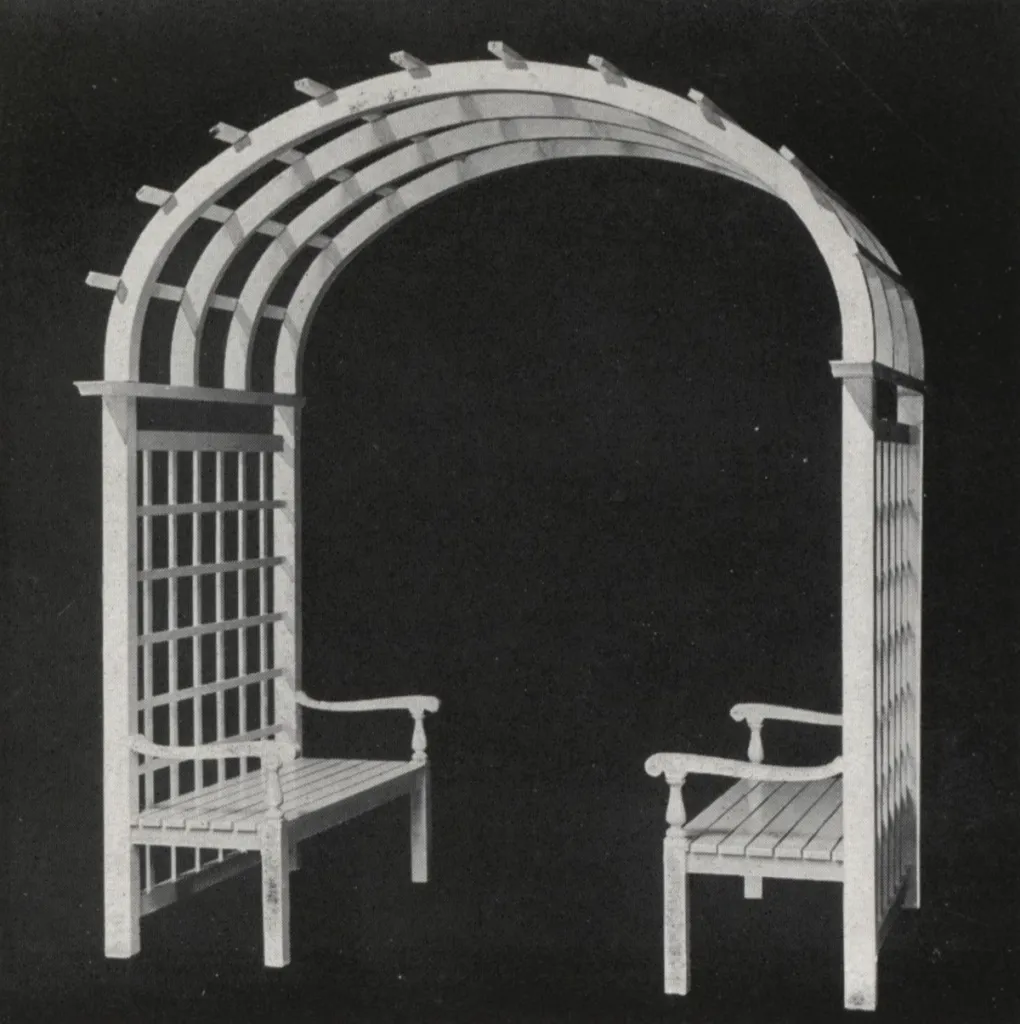
Source: Catalog of Garden Furniture: Arbors, Pergolas, Gateways, Trellises, Fences, Etc., Hand Made. The Mathews Manufacturing Company, Lakewood, Cleveland, Ohio, 1920, seventh edition. Internet Archive.
A wooden garden arch with lattice sides and built-in benches, designed as both a passageway and a shaded resting place.


6.8FT Wooden Plant Arch with 2-Seat Bench for Outdoor Garden Lawn Backyard
(753808) 99.50% positive
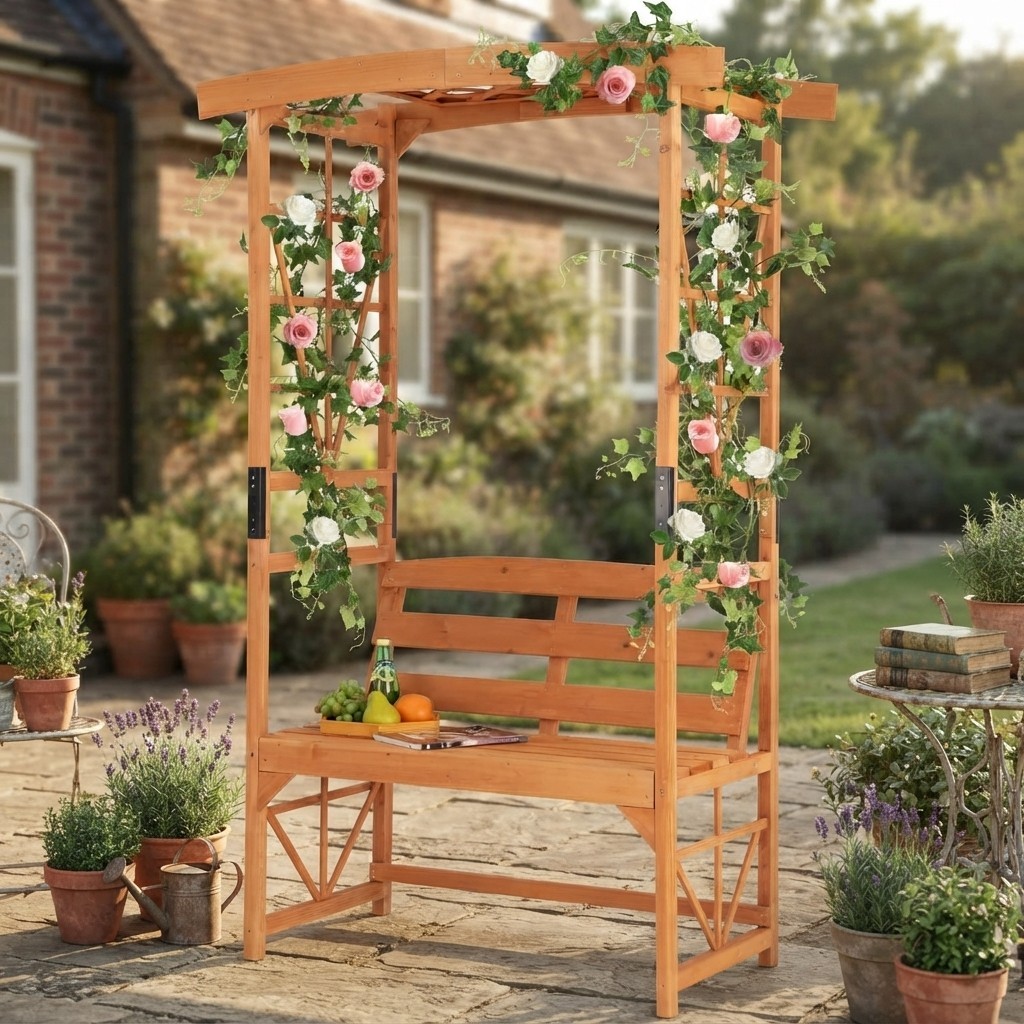


Natural Fir Wood Garden Arch with Integrated Bench & Trellis - Easy to Assemble
(original price: 159.84 GBP)
(2998) 99.70% positive
Wooden Garden Arch with Gate
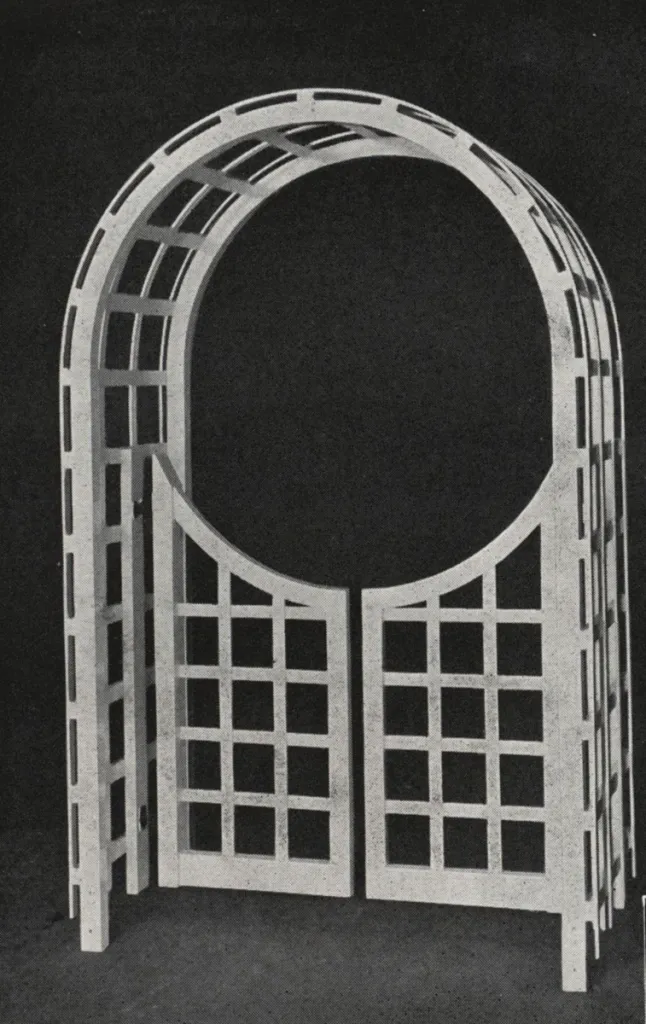
Source: Catalog of Garden Furniture: Arbors, Pergolas, Gateways, Trellises, Fences, Etc., Hand Made. The Mathews Manufacturing Company, Lakewood, Cleveland, Ohio, 1920, seventh edition. Internet Archive.
A wooden Moon Gate creates a circular garden entrance with trellis sides and a small gate for a more formal passage.
Heavy Duty Wooden Garden Arch
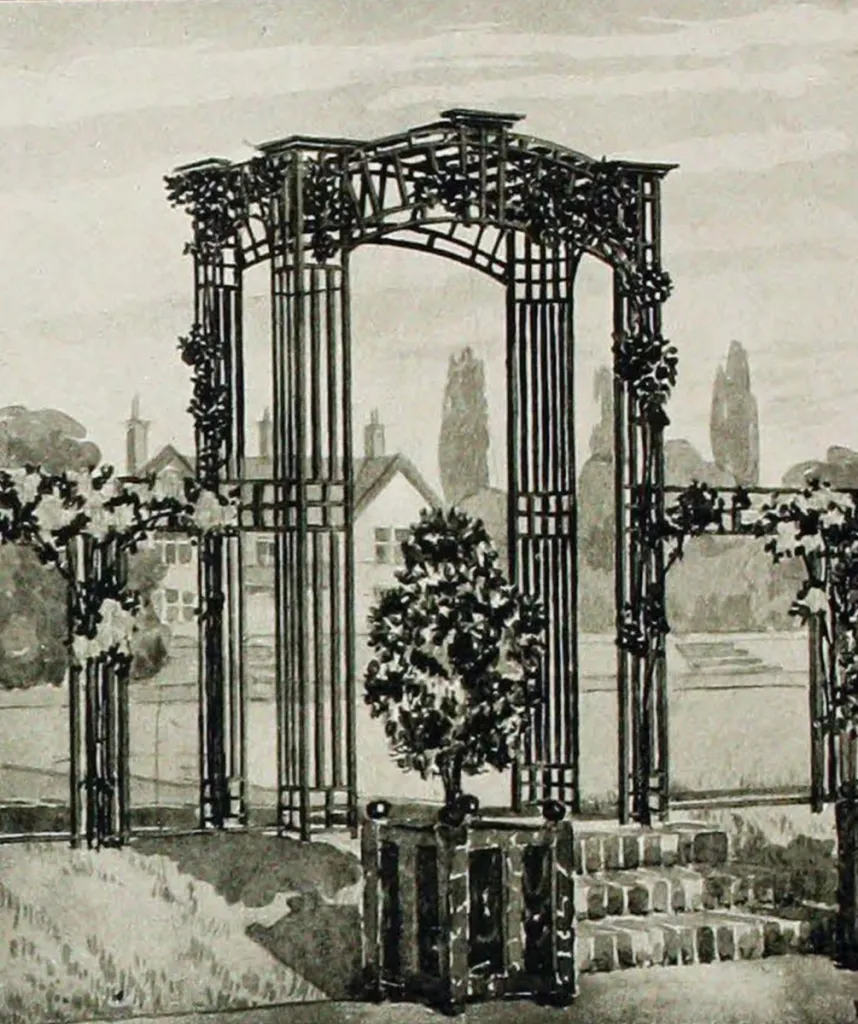
Source: John P. White, Garden Furniture and Ornament. The Pyghtle Works, Bedford, and 134 New Bond St., London W., 1915. Internet Archive.
A substantial oak garden arch is well suited to formal entrances where a durable, architectural frame is needed for climbing plants.
Rustic Arch
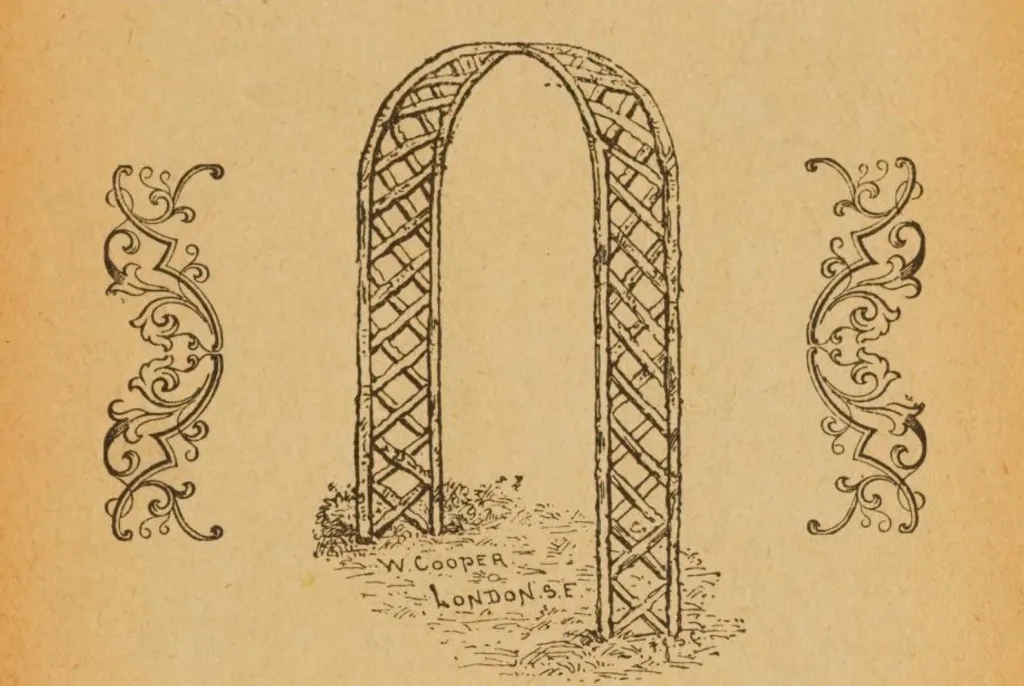
Source: W. Cooper, Ltd., Illustrated Catalogue of Goods Manufactured and Supplied by W. Cooper, Ltd. Offices and Show Grounds, 751 Old Kent Road, London, S.E.; Steam Works, 747 to 755 Old Kent Road, London, S.E., 1903. Internet Archive.
A rustic arch gives a garden path a natural-looking entrance, provides support for climbing plants, and is especially beloved as a decorative feature for weddings.
Metal Arch
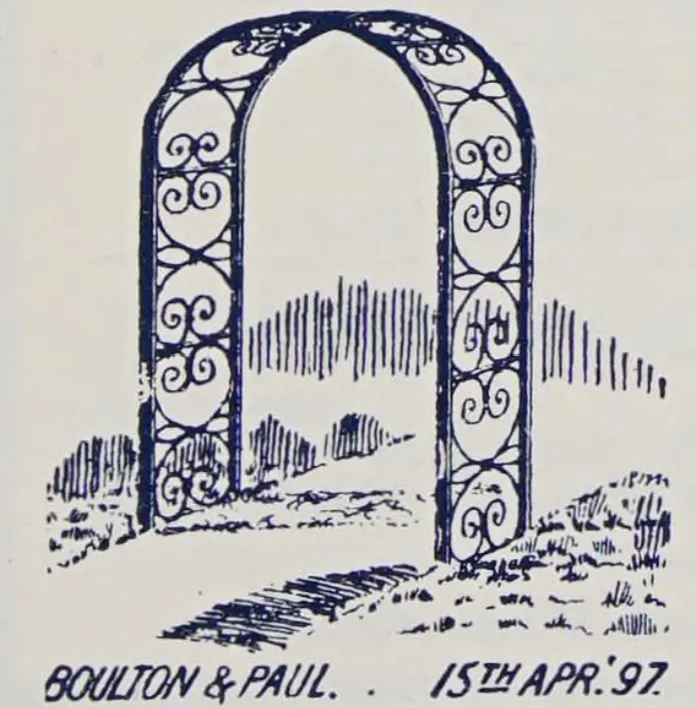
Source: Boulton & Paul, Ltd., Manufacturers, Rose Lane Works, Norwich. No. 97, Revised Edition, March 1898. Internet Archive.
A metal arch is preferable to a wooden one where a slimmer outline, better weather resistance, and strong support for climbing plants are desired.
Metal Garden Arch with Seat
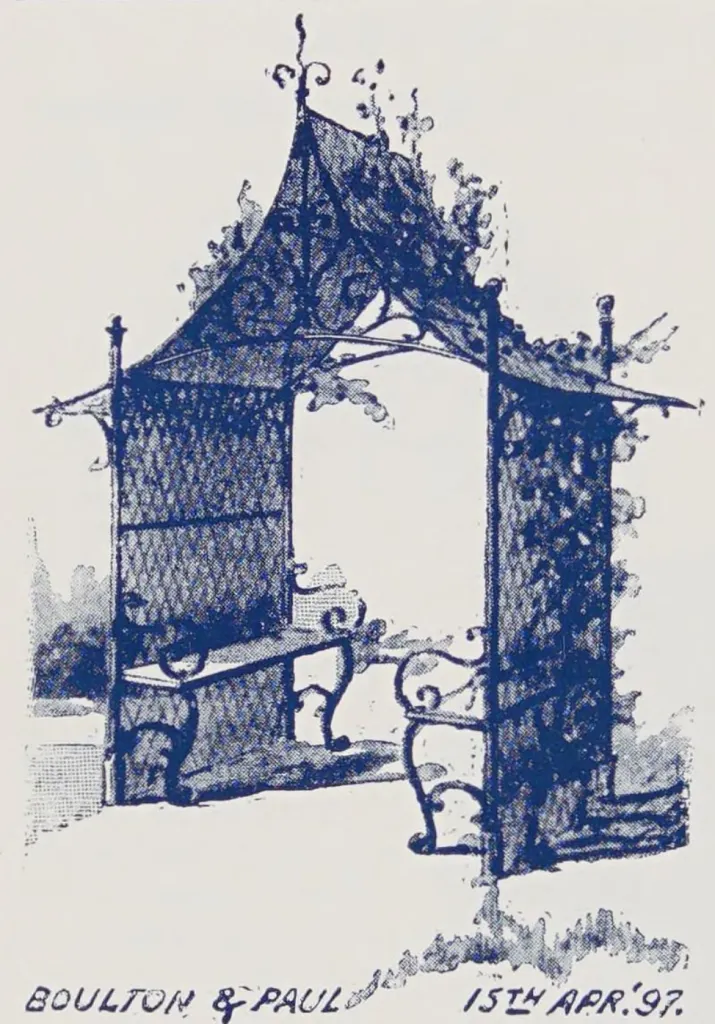
Source: Boulton & Paul, Ltd., Manufacturers, Rose Lane Works, Norwich. No. 97, Revised Edition, March 1898. Internet Archive.
A metal arch with seats works well where a garden entrance should also serve as a decorative place to pause and rest.
Ornamental Metal Arch
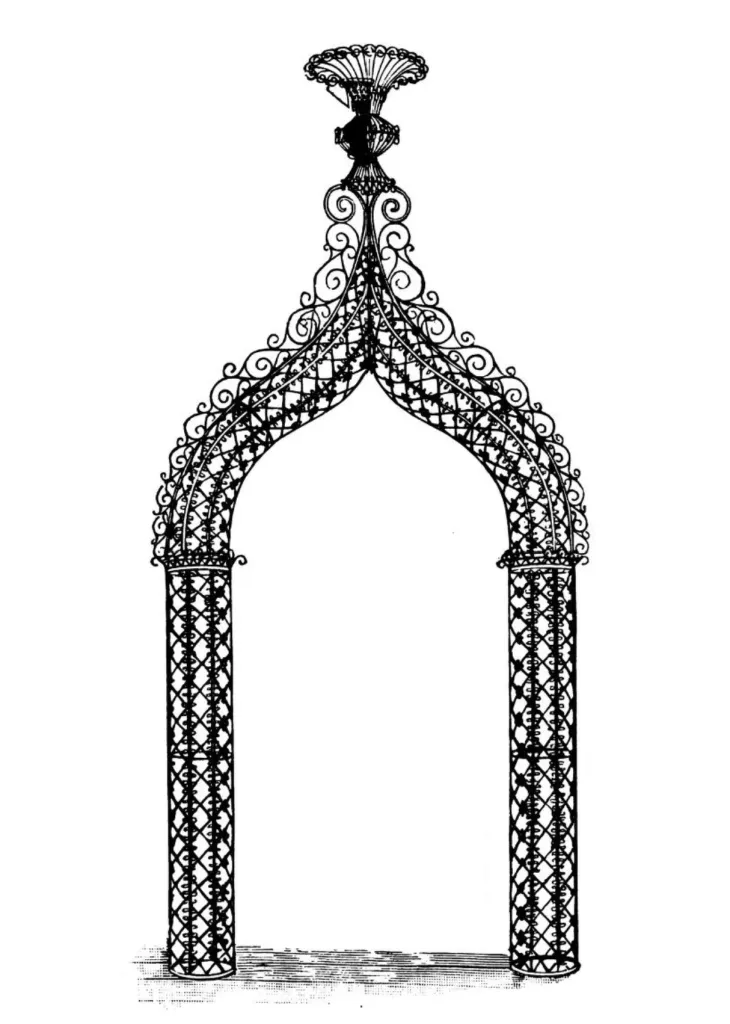
Source: Barbee Wire and Iron Works catalogue, 1899. Internet Archive.
A metal arch like this suits a garden walk where a light, decorative frame is needed to guide climbing plants without blocking the view.
Share this article