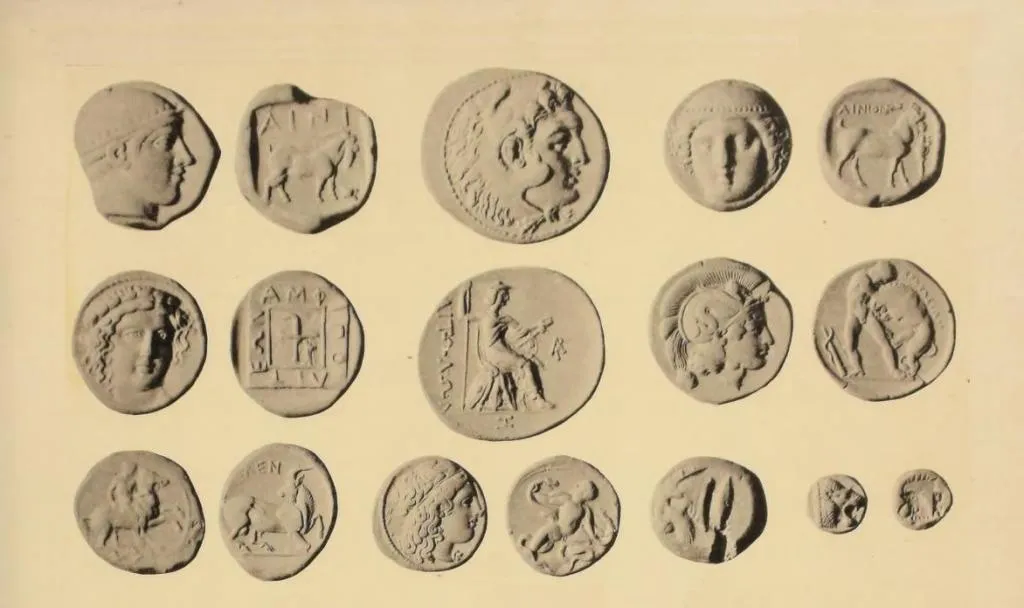
Ancient Greek Gold and Silver Stater Coins
Xxxxxxxxx
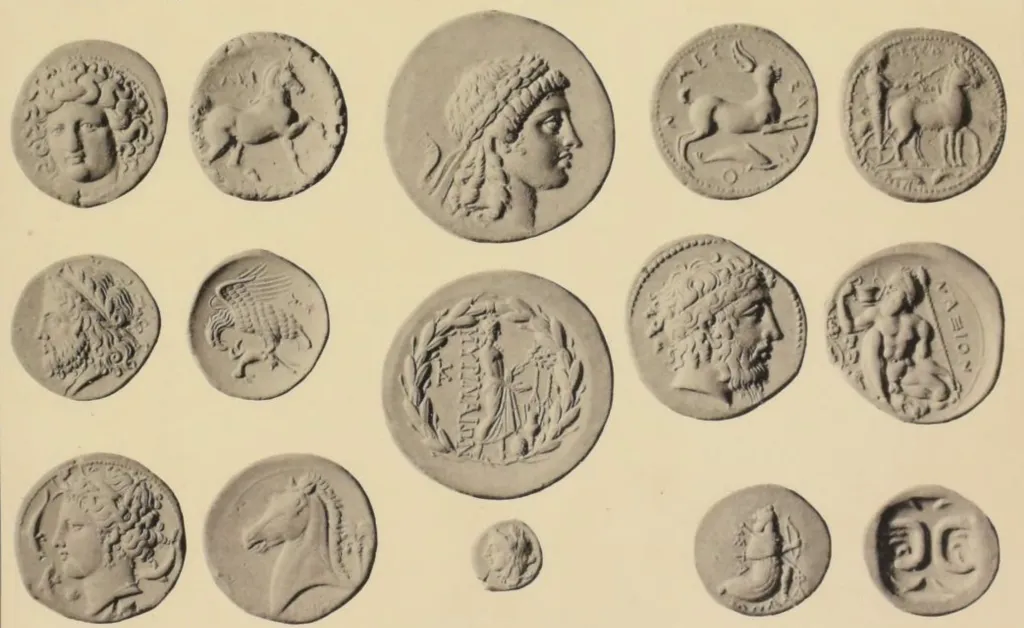
Source: Sotheby, Wilkinson & Hodge, The Important Collection of Coins and Medals of Wm. Rome, London, 24 February 1904. Internet Archive.
Xxxxxxxxxx
Table of Contents
Kelenderis, Cilicia: Greek Silver AR Stater with Naked Horseman and Kneeling GoatHerakleia, Lucania: Greek Silver AR Stater with Athena and Herakles Wrestling the LionKroton, Bruttium: Greek Silver AR Stater with Apollo and Young Herakles Strangling SerpentsLarissa, Thessaly: Greek Silver Stater with Nymph Larissa and Prancing HorseKelenderis, Cilicia: Greek Silver AR Stater with Naked Horseman and Kneeling Goat
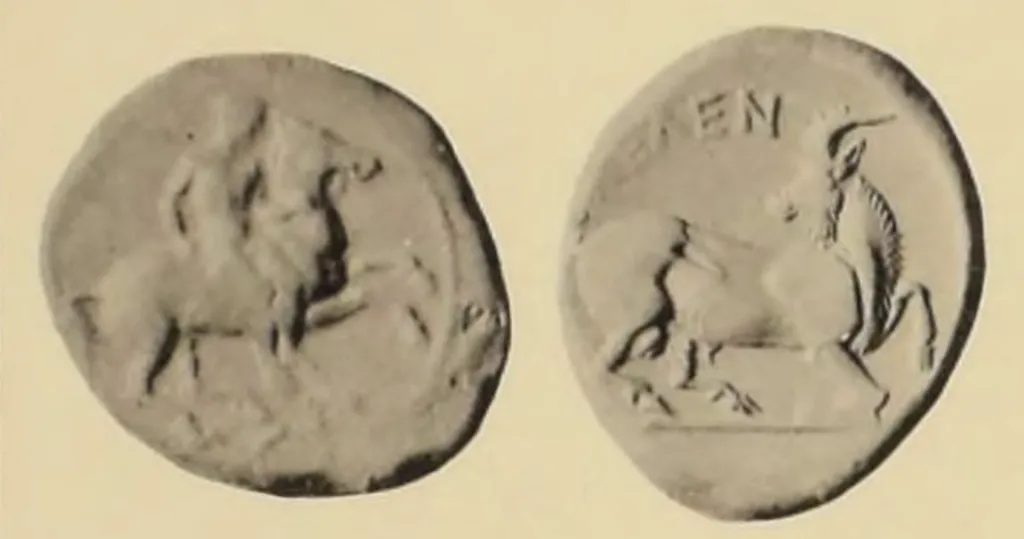
Source: Sotheby, Wilkinson & Hodge, The Important Collection of Coins and Medals of Wm. Rome, London, 24 February 1904. Internet Archive.
Kelenderis, Cilicia — AR stater. The obverse shows a naked horseman riding to the right, with a small field mark beneath, usually read as TA (?) or a similar letter group. The reverse carries a goat kneeling to the right on one knee. The inscription reads KEΛEN, an abbreviated ethnic referring to Kelenderis. This type is very fine in style and regarded as rare. In modern terms, this indicates a city-issued silver coin identified by the abbreviated name of the mint on the reverse.
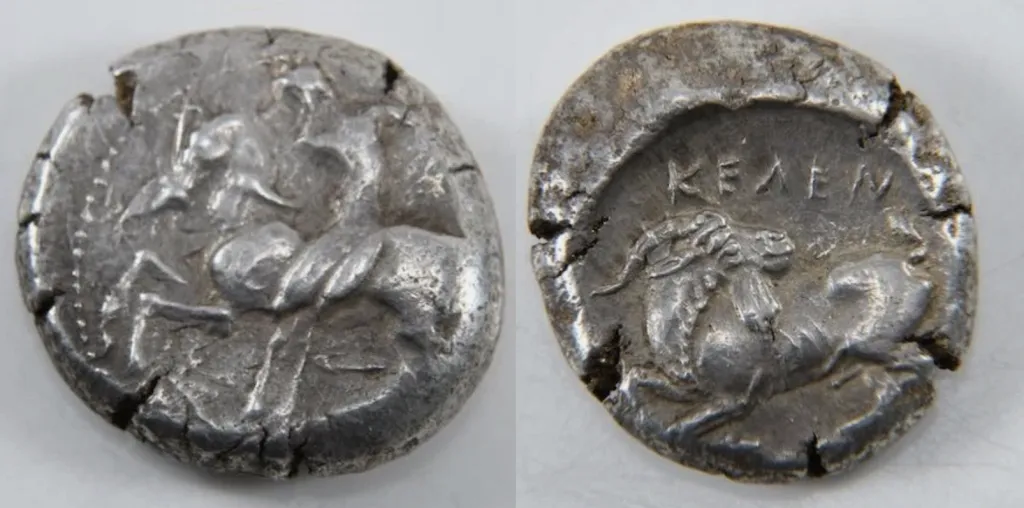
Source: by Stable MARK - own work.
- Year — Minted circa 425–400 BC.
- Diameter — Known examples of this type usually measure about 19–21.5 mm.
- Weight — Standard weight of this type: approx. 10.7 g / 0.38 oz.
How much is it worth?
A similar example in excellent antique condition was sold on eBay (USA) for $450 in Feb 2026.


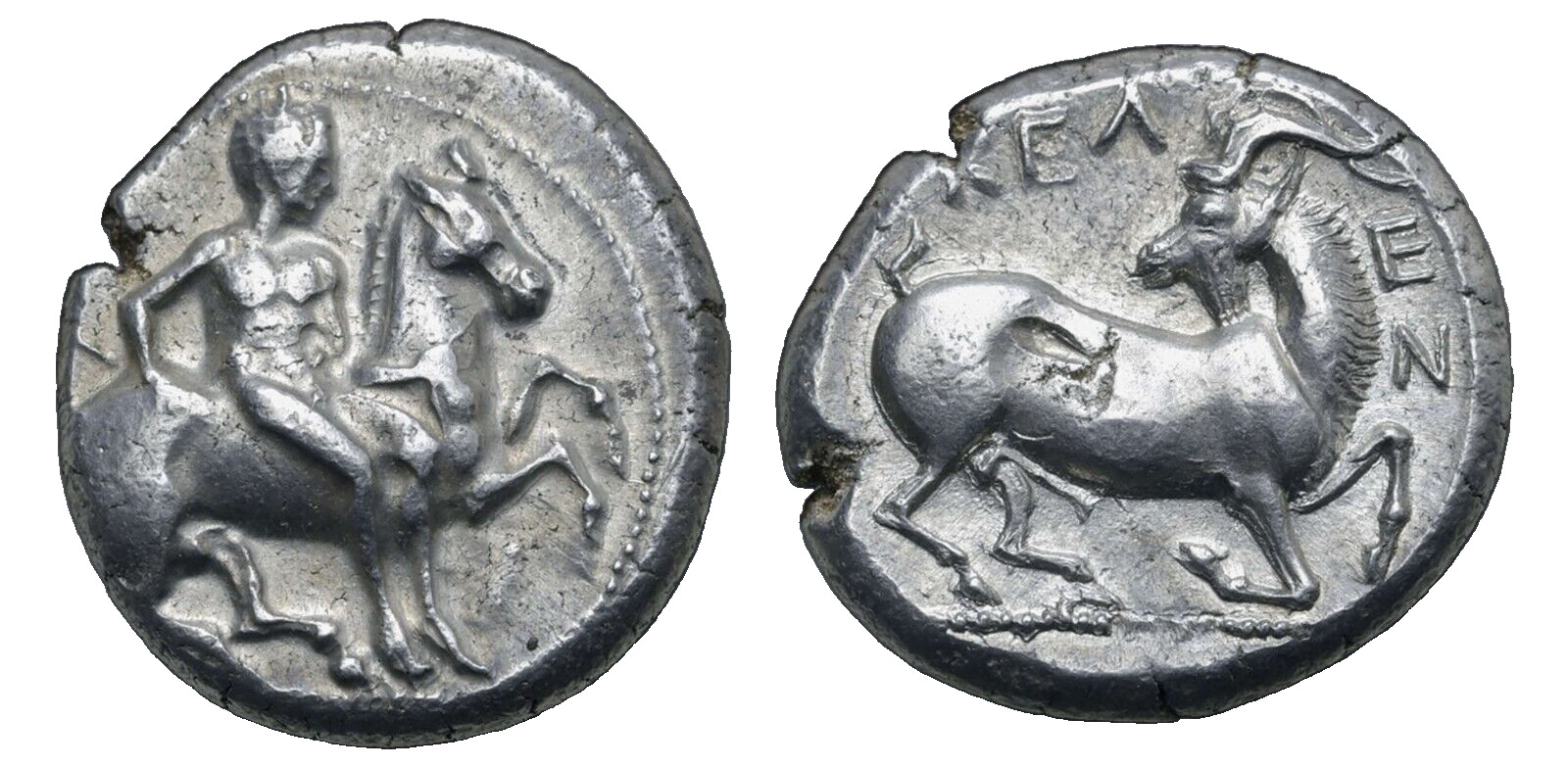
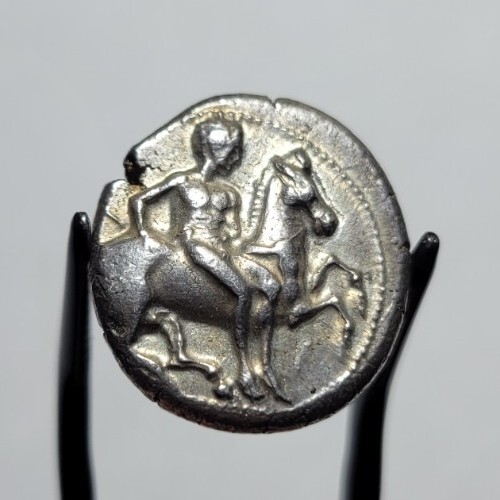

ANCIENT GREEK Cilicia, Kelenderis c. 425 BC - AR Stater Horse Rider GOAT Near AU
(403) 97.10% positive
Herakleia, Lucania: Greek Silver AR Stater with Athena and Herakles Wrestling the Lion
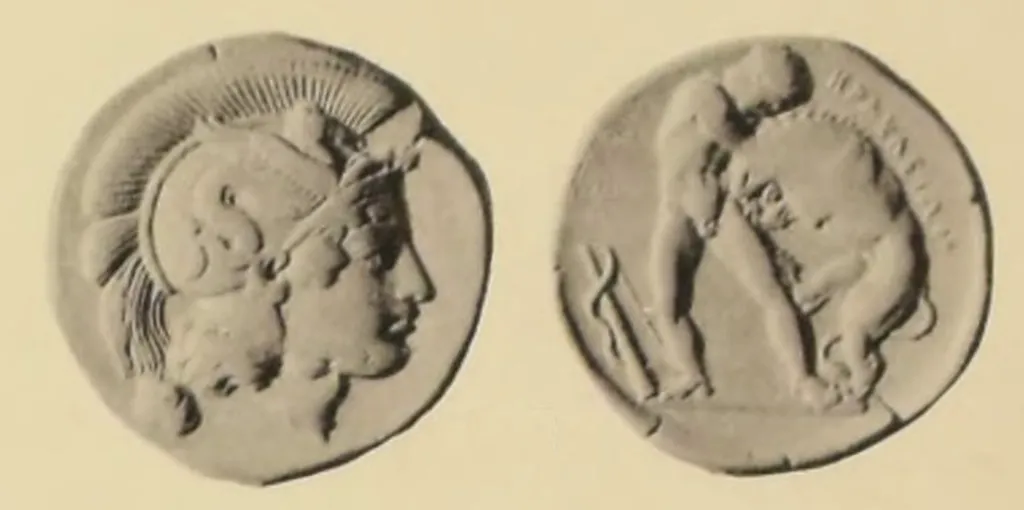
Source: Sotheby, Wilkinson & Hodge, The Important Collection of Coins and Medals of Wm. Rome, London, 24 February 1904. Internet Archive.
Herakleia, Lucania — AR stater. The obverse shows the head of Athena facing right, wearing a crested helmet with a seahorse on the side. The reverse carries Herakles wrestling the lion. The inscription reads HPAKLEIŌN, meaning “of the Herakleians” or “of Herakleia.” In the field appears a club and bow at left. This type is very rare and noted for its unusually fine style. In modern terms, this indicates a scarce and artistically accomplished civic silver issue struck in the name of the city rather than a king.
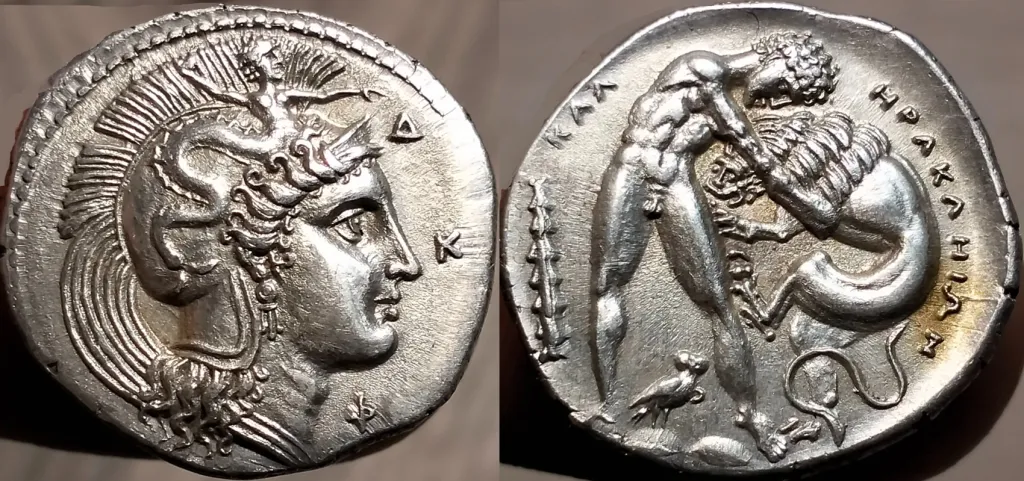
Source: by Stable MARK - own work.
- Year — Minted circa 471/470–469/468 BC.
- Diameter — Known examples of this type measure 23–25.6 mm.
- Weight — Standard weight of this type: approx. 15.89 g / 0.56 oz.
Kroton, Bruttium: Greek Silver AR Stater with Apollo and Young Herakles Strangling Serpents
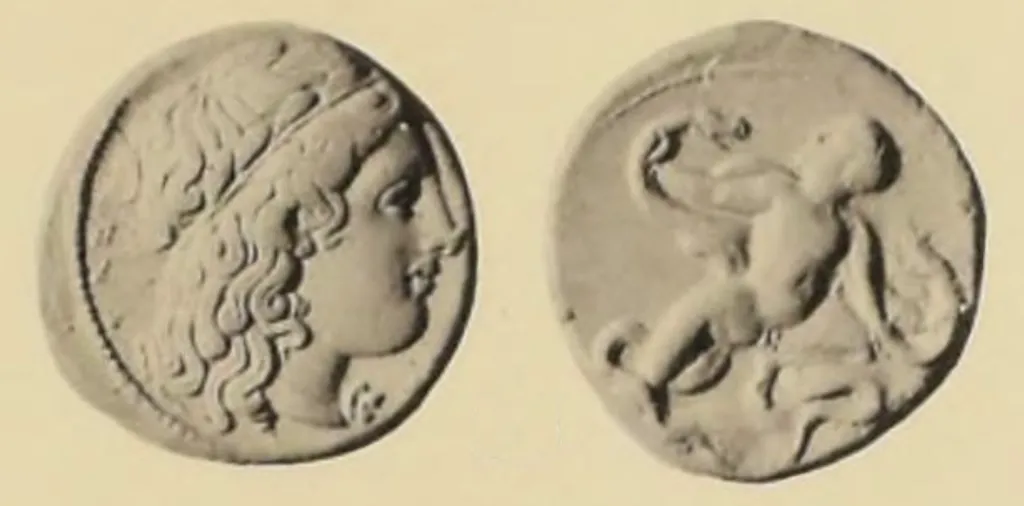
Source: Sotheby, Wilkinson & Hodge, The Important Collection of Coins and Medals of Wm. Rome, London, 24 February 1904. Internet Archive.
Kroton, Bruttium — AR stater. The obverse shows a laureate head of Apollo facing right. The reverse carries the young Herakles strangling two serpents. The inscription reads ΚΡΟΤΩΝΙΑΤΑΣ, meaning “of the Krotoniates.” No additional field symbol is clearly indicated on this type. This type is very rare. In modern terms, this indicates a civic silver issue of Kroton that links Apollo with the infant Herakles myth as an expression of local identity.
- Year — Minted circa 400–325 BC.
- Diameter — Known examples of this type measure about 20–21 mm.
- Weight — Standard weight of this type: approx. 7.5 g / 0.26 oz.
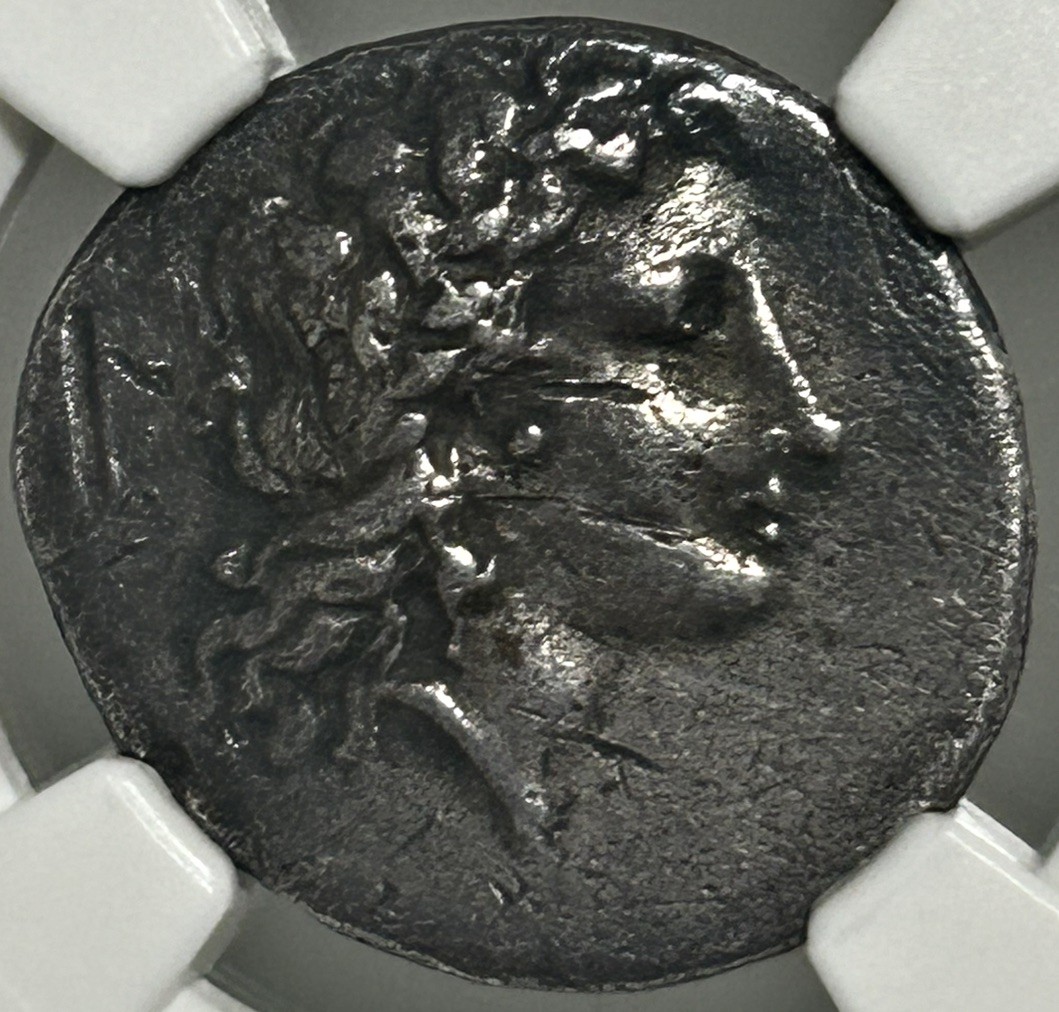


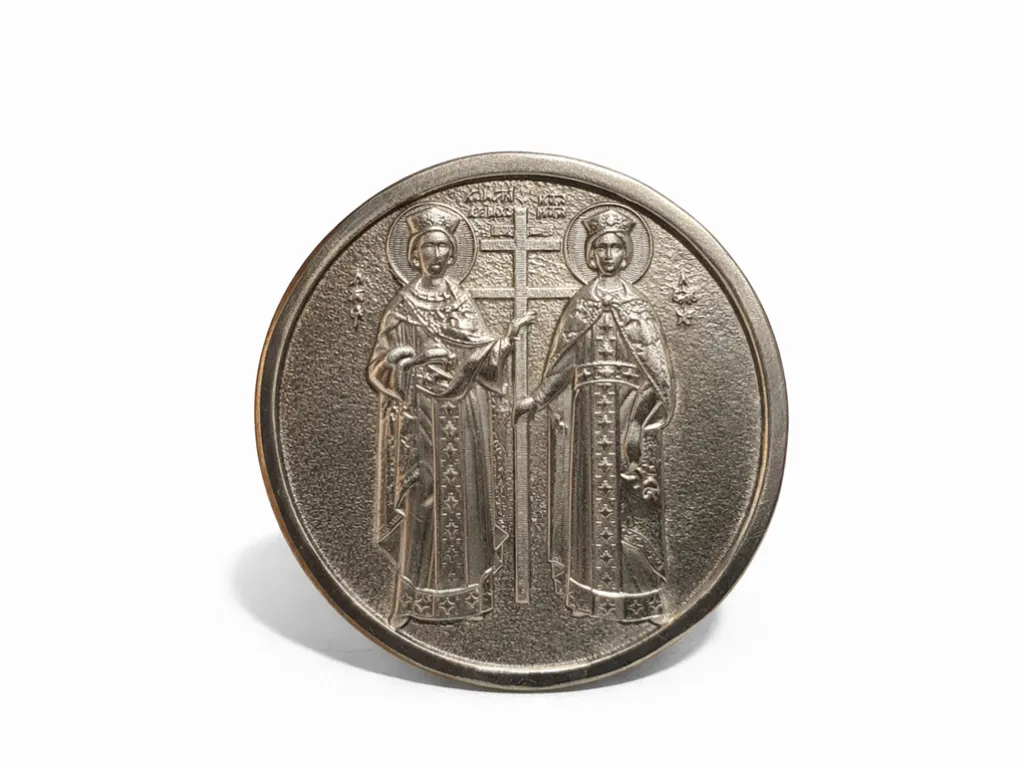
Bruttium Croton AR Stater 350-300 BC Apollo Tripod NGC XF
(926) 100.00% positive
Larissa, Thessaly: Greek Silver Stater with Nymph Larissa and Prancing Horse
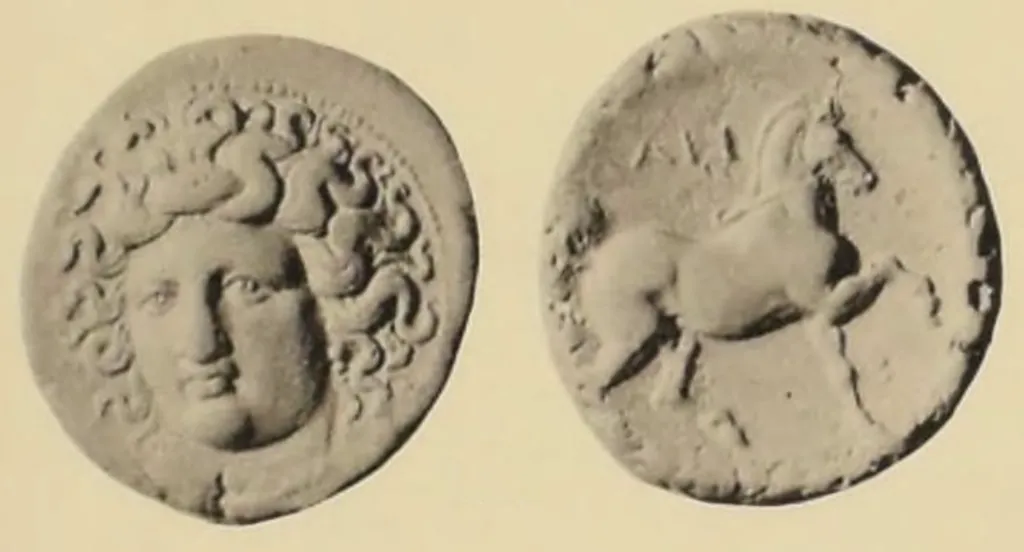
Source: Sotheby, Wilkinson & Hodge, The Important Collection of Coins and Medals of Wm. Rome, London, 24 February 1904. Internet Archive.
Larissa, Thessaly — AR stater. The obverse shows the head of the nymph Larissa facing, with flowing hair. The reverse carries a horse prancing to the right. The inscription reads ΛΑΡΙ, an abbreviated form of the city name. No additional field symbol is clearly noted for this type. This type is very fine and very rare. In modern terms, this indicates a scarce civic silver issue of Larissa that combines the local nymph with the horse imagery for which Thessalian coinage is especially well known.
- Year — Minted circa 356–342 BC.
- Diameter — Known examples of this type measure about 23 mm.
- Weight — Standard weight of this type: approx. 12.27 g / 0.43 oz.
Share this article